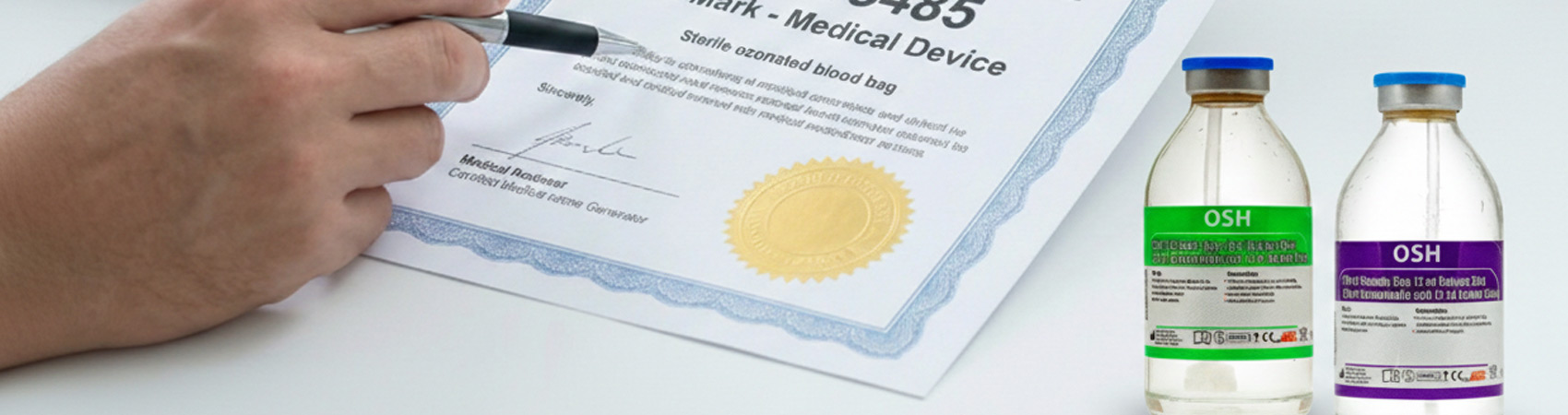
The certification standards of devices, sets, syringes, and blood bags used in Ozone Therapy applications are of paramount importance for the safety and efficacy of the treatment. So, why is correct certification so critical, and why is the CE Class IIb certificate a necessity rather than a luxury?
What is Ozone Therapy? Benefits and Fields of Application
Ozone Therapy, performed by applying pure ozone gas to the body in a controlled manner, is an effective treatment method that stands out among alternative and complementary medicine applications. This method offers significant benefits such as strengthening the immune system, supporting cellular regeneration, and increasing oxygen utilisation in the body. Ozone Therapy can be safely applied in many different areas, including pain management, supportive treatments for chronic diseases, and general health improvement.
When applied regularly and correctly, it both supports the body's natural defence mechanisms and enhances overall quality of life. With its high oxidative power, Ozone Therapy creates a balancing and healing effect in the body. When administered in controlled doses, it regulates blood circulation, aids in the elimination of toxins, and boosts cellular energy production.
Primary Ozone Therapy Methods:
- Major Ozone Autohemotherapy (Blood Ozonation): Blood taken from the patient is mixed with ozone and re-administered to the patient.
- Minor Ozone Therapy: A supportive application performed with a smaller amount of blood.
- Ozone Gas Injection (Local Injection): Applied directly around muscles, joints, or nerves.
- Rectal / Vaginal Insufflation: Performed by delivering gas directly into body cavities.
- Topical Ozone Therapy: Applied locally to the skin, wounds, or infected areas.
Why Does Safety Come Before Everything?
The reactive nature of ozone gas makes the quality of the materials it comes into contact with vital. Bottles, sets, filters, and bags used in treatment must be manufactured from special materials that are ozone-resistant, biocompatible, and compliant with medical standards. Otherwise, the ozone may react with the material to create toxic by-products, causing the ozone dose to become uncontrolled and compromising the safety of the treatment.
For this reason, the success of Ozone Therapy depends not only on the correct dose but also on all consumables and devices having the correct medical certification. The certification level of the systems used directly determines both the efficacy of the application and the safety of the patient.
Medical Device Certification: Why the Difference Between IVD and CE Class IIb Matters?
Devices, sets, syringes, and blood bags used in Ozone Therapy applications directly affect human health. Therefore, the certification class of these products is of great importance.
Medical devices are classified under the European Union Medical Device Regulation (MDR), and these classes are determined based on the product's level of contact with the human body, duration of use, and risk level.
- IVD (In Vitro Diagnostic) Products: Intended solely for laboratory tests and diagnosis. Blood taken from the patient with these products is analysed within the device but is never re-administered to the body.
- CE Class IIb Products: Can be used in invasive applications involving contact with blood and the re-administration of ozonated blood to the patient.
By its nature, Ozone Therapy is a procedure involving blood contact. Therefore, the sets, filters, and devices used must be certified as at least CE Class IIb or Class III. Using IVD-class products otherwise is both contrary to regulations and risky for patient safety.
Key Differences Between IVD and CE Class IIb Certificates
There are two fundamental classifications often confused in Ozone Therapy applications: IVD and CE Class IIb. The differences between these two classes are extremely important from both a technical and ethical perspective:
| Feature | IVD (IN VITRO DIAGNOSTIC) | CE Class IIb |
|---|---|---|
| Intended Use | Diagnosis, laboratory tests | Treatment, invasive medical applications |
| Re-use of Blood | Not suitable | Suitable and safe |
| Biocompatibility Tests | Not required | Mandatory |
| Sterility Standard | Basic level | Medical Sterilisation is mandatory |
| Regulatory Compliance | Invalid for Ozone Therapy | Valid for Ozone Therapy |
These differences are decisive not only technically but also in terms of patient safety and the responsibility for ethical practice. Performing Ozone Therapy with IVD products means using a device outside its intended manufacturing purpose and is both legally and ethically incorrect. Therefore, the use of materials with CE Class IIb certification is vital in Ozone Therapies.
Biozon Medical: Pioneering Clinical Safety with CE Class IIb Approved Ozone Systems
At Biozon Medical, we prioritise safety above all else in the field of Ozone Therapy. With our CE Class IIb certified products, we offer systems fully compliant with international standards, where blood can be ozonated and safely returned to the patient.
Our Products:
- Are CE Class IIb certified and specifically developed for medical ozone treatment.
- Are manufactured under the ISO 13485 quality management system.
- Contain sterile, biocompatible, and safe materials.
- Fully meet the requirements of the European Union Medical Device Regulation (MDR).
We view genuine medical safety not just as a legal requirement, but as an ethical responsibility. By choosing CE Class IIb certified Biozon products instead of IVD for your Ozone Therapy applications, you can protect both patient safety and the professional standards of your practice.
Frequently Asked Questions (FAQ)
Q: Why can't I use an IVD set in Ozone Therapy?
A: Because IVD sets are for diagnostic purposes only and are not manufactured from biocompatible materials suitable for contact with blood that will be re-administered to the body. This is both illegal and risky for patient health.
Q: How can I tell if a product is CE Class IIb?
A: The CE mark, followed by the four-digit identification number of the Notified Body, must be present on the product packaging and in the technical documentation.